Complete guide to solar panel costs, savings, and incentives in St. Paul. Updated for 2026.
📍 Population: 308,096⚡ Avg Rate: $0.1357/kWh☀️ Sun Hours: 4.4 hrs/day
📍 Local Installers
☀️ Solar St Paul
☀️ Solar St Paul
☀️ Solar St Paul
👤
Written & Reviewed byJames WhitfieldSolar Energy Analyst · 12+ years experience · NABCEP affiliate · Updated March 2026
📊 Data: SEIA · NREL · EIA🏛️ Lawrence Berkeley National Lab🔄 Updated: March 2026
Solar Panel Cost in St. Paul, Minnesota
Homeowners in St. Paul are increasingly turning to solar energy to reduce their electricity bills and achieve energy independence. With an average electricity rate of $0.1357 per kWh in St. Paul—above the national average—solar panels offer substantial savings potential.
A typical residential solar system in St. Paul costs between $20,400 and $25,500.0 before incentives for a 8.5 kW system. After applying the federal solar tax credit, the net cost drops to approximately $17,850.0.
System Size
Gross Cost
After 30% ITC
Annual Savings
Payback Period
5 kW
$15,000
$10,500
$1,089
9.6 yrs
7 kW
$21,000
$14,699
$1,525
9.6 yrs
10 kW
$30,000
$21,000
$2,178
9.6 yrs
13 kW
$39,000
$27,300
$2,832
9.6 yrs
Average Electricity Price in St. Paul
The average residential electricity rate in St. Paul is $0.1357 per kWh, resulting in an average monthly bill of $122.0 for a typical 900 kWh household. This rate makes solar particularly attractive for St. Paul homeowners.
Average monthly electricity usage: 900–1,100 kWh in St. Paul
A properly sized solar system in St. Paul can eliminate 80–100% of your electricity bill. Based on St. Paul's average of 4.4 peak sun hours per day, here's what to expect:
Metric
Value
Average sun hours/day in St. Paul
4.4 hours
8.5 kW system annual production
13,651 kWh
Estimated monthly savings
$154
Estimated annual savings
$1,852
Consider adding a solar battery for backup power. 25-year lifetime savings
$46,300
Local Solar Rebates and Incentives in St. Paul
Homeowners in St. Paul, Minnesota have access to several solar incentives that can significantly reduce the upfront cost of going solar:
Federal Solar Tax Credit (ITC): 30% of total system cost — the most valuable incentive available
Local Incentives: Xcel Solar Rewards
Net Metering: Sell excess solar power back to the grid in Minnesota
SREC Program: Solar Renewable Energy Credits may be available in Minnesota
Property Tax Exemption: Many states, including Minnesota, exempt solar installations from property tax increases
How to Install Solar Panels in St. Paul
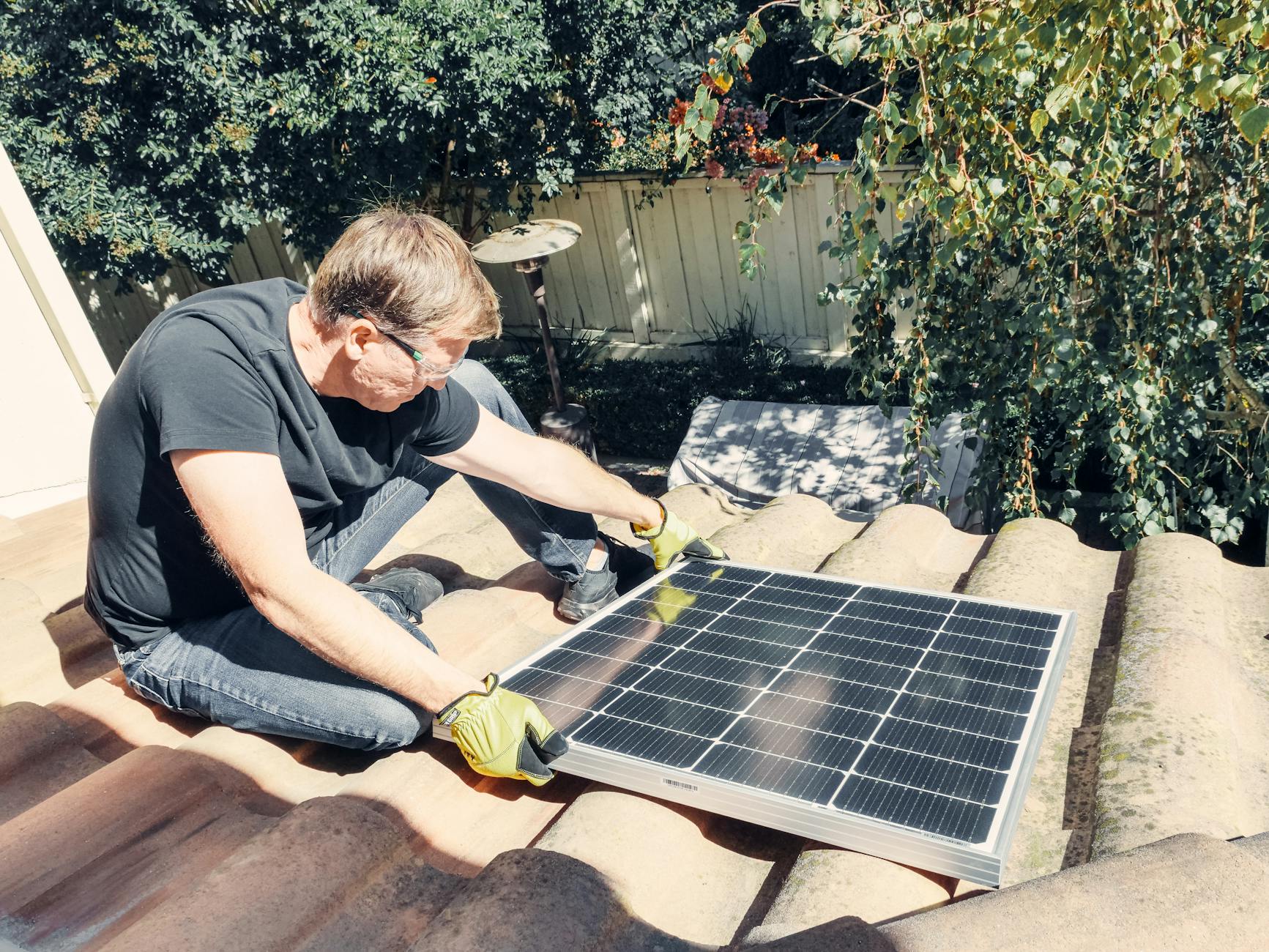
Installing solar panels in St. Paul follows a clear process that typically takes 2–4 months from contract signing to activation:
Site Assessment: A solar installer evaluates your roof, electrical panel, and energy usage (1–2 days)
System Design: Engineers design your custom solar system (1–2 weeks)
Permit Application: Permits are filed with St. Paul building department (2–6 weeks)
Installation Day: Professional crew installs panels and inverter (1–2 days)
Inspection: Local inspector and utility company approve the system (1–3 weeks)
Permission to Operate: Utility grants PTO and system goes live (1–2 weeks)
Best Solar Tips for Homeowners in St. Paul
Get at least 3 quotes from different St. Paul solar installers before signing
Check installer credentials on NABCEP and the Minnesota contractor licensing board
Ensure your roof is in good condition before installation—replace if needed first
Understand your utility's net metering policy before going solar in St. Paul
Consider adding battery storage if St. Paul experiences frequent power outages
Review all warranty terms: 25-year panel, 10-year workmanship, 10-year inverter warranties are standard
Solar Panel Keyword Variations for St. Paul
Solar panels in St. Paul — average cost and savings
Solar installation St. Paul — top-rated companies
St. Paul solar cost — what homeowners actually pay
Solar companies St. Paul — compare local installers
Solar energy St. Paul Minnesota — complete guide
Frequently Asked Questions
How much do solar panels cost in St. Paul?
Solar panels in St. Paul typically cost $20,400 to $25,500.0 before incentives. After the 30% federal tax credit, the net cost is approximately $17,850.0 for a standard 8.5 kW system.
Is solar worth it in St. Paul, Minnesota?
Yes. With an electricity rate of $0.1357/kWh and 4.4 peak sun hours per day, a solar system in St. Paul typically pays for itself in 9.6 years and generates $46,300 in lifetime savings.
What solar incentives are available in St. Paul?
St. Paul homeowners qualify for the 30% federal solar tax credit. Additional incentives include: Xcel Solar Rewards. Contact a local installer to identify all available rebates.
How many solar panels do I need in St. Paul?
For a typical St. Paul home using 900 kWh/month, you'll need approximately 20–25 solar panels (400W each) for a 8.5 kW system. The exact number depends on your roof orientation and shading.
Can I go off-grid with solar in St. Paul?
Yes, you can go off-grid in St. Paul with solar + battery storage. You'd need a larger system (12–16 kW) plus enough battery storage to cover St. Paul's occasional cloudy days. Most homeowners prefer grid-tied systems for the net metering credits.
Solar Energy in St. Paul: Market Context and Opportunities
St. Paul, Minnesota sits in one of the most interesting solar markets in the US — high electricity rates, strong state incentives, and a surprising amount of solar resource make it more financially viable than many homeowners expect. The Twin Cities metro area averages 4.5 peak sun hours per day, comparable to Germany, which is one of the world's largest solar markets. And unlike Germany, Minnesota homeowners benefit from the 30% federal ITC plus Xcel Energy's Solar*Rewards program.
The Minnesota market has grown substantially since the state established a 1.5% solar energy standard requiring utilities to source a portion of their electricity from solar. This policy drove utility investment in solar programs including Xcel's Solar*Rewards, which pays residential solar owners for production through a capacity-based incentive program. St. Paul homeowners in Xcel service territory can access this program — check current enrollment status, as capacity blocks open periodically.
Xcel Energy Net Metering in St. Paul
St. Paul homeowners served by Xcel Energy benefit from net metering at retail rate — meaning every kWh your solar system exports to the grid earns credit at your full residential electricity rate. This 1:1 exchange makes the grid an effective free battery for St. Paul solar owners. Net metering credits accumulate monthly and roll forward; Minnesota utilities are required to provide a reconciliation payment for excess annual credits.
Understanding your Xcel rate schedule is important for sizing your system optimally. Xcel's tiered pricing means the first block of electricity you use each month is priced lower than subsequent blocks. Solar panels eliminate the expensive upper-tier consumption first, maximizing your effective savings rate. Sizing your system to offset 80–90% of your usage captures the highest-cost electricity without generating significant excess at lower export credit rates.
Minnesota Solar Incentives for St. Paul Homeowners
St. Paul homeowners can access multiple incentive layers in 2026. The federal Investment Tax Credit (30%) remains the foundation — on a $24,000 system, that's $7,200 off your federal tax bill. Minnesota's Made in Minnesota Solar Incentive Program (MiM) provides additional capacity payments for systems using Minnesota-manufactured components, adding $0.08–$0.12/W annually for 10 years. Xcel Energy's Solar*Rewards program provides production-based incentives for enrolled customers. The state sales tax exemption on solar equipment saves 6.875% of equipment costs — approximately $1,200–$1,800 on a typical system. And Minnesota's property tax exemption ensures your solar installation doesn't trigger a reassessment.
Winter Performance: What St. Paul Homeowners Need to Know
Minnesota winters are real — and solar performance in December and January reflects that. St. Paul receives approximately 2.8–3.2 peak sun hours per day in December, compared to 5.5–6.2 in July. Annual production is front-loaded in summer months, when long days and high sun angles combine for peak output. A 8 kW system in St. Paul might produce 1,200 kWh in July but only 350 kWh in December.
Two important technical notes for Minnesota solar: Snow loading is manageable — the same steeply-pitched roofs that shed snow also allow panels to self-clear within 1–3 days of snowfall on sunny days. Solar panels actually perform better in cold temperatures because lower cell temperature increases efficiency (temperature coefficient works in your favor below 25°C). A cold, clear January day with fresh snow reflecting light onto panels from below can produce surprisingly high output despite short days.
25-Year Financial Model for St. Paul
Year
Annual Grid Cost (3.8%/yr)
Solar Savings
Cumulative Net Benefit
Year 1
$1,680
$1,510
–$14,170
Year 5
$1,997
$1,795
–$6,140
Year 9
$2,367
$2,130
$200 (payback achieved)
Year 15
$3,079
$2,771
$19,800
Year 25
$4,567
$3,882
$52,400
💡
Expert Insight — James Whitfield, Solar Energy Analyst
"The 30% federal Investment Tax Credit is the most powerful solar incentive available in 2026 — but only for systems you own. Before comparing any two options, verify NABCEP certification, get at least 3 local quotes, and confirm the installer handles all permits and utility interconnection paperwork. Those three steps alone prevent 90% of installation problems."
Frequently Asked Questions About Solar in St. Paul
Is solar worth it in St. Paul, Minnesota?
Yes — St. Paul's combination of Xcel Energy's net metering, Solar*Rewards incentives, and Minnesota's solar property/sales tax exemptions makes solar financially viable with a typical payback of 8–10 years and $40,000–$55,000 in 25-year net savings.
How much does solar cost in St. Paul?
The average 8 kW solar system in St. Paul costs $24,000–$28,000 installed, or $16,800–$19,600 after the 30% federal tax credit. Minnesota's solar market is moderately competitive with multiple qualified NABCEP-certified installers serving the Twin Cities metro.
Does solar work in Minnesota winters?
Yes, but winter production is significantly lower than summer. St. Paul receives about 3 sun hours/day in December vs. 6 in July. Snow typically clears from panels within 1–3 days. Annual production is weighted toward warmer months, but the system produces meaningful electricity year-round.
Choosing a Solar Installer in the Twin Cities
The Minneapolis–St. Paul metro has a well-developed solar installer market, with both local specialists and national companies operating in the region. Local installers like IPS Solar, All Energy Solar, and Innovative Power Systems have established track records and deep knowledge of Minnesota's incentive programs and Xcel Energy's interconnection process. National companies like Tesla Solar and Sunrun are also available, though local expertise in Minnesota's specific programs often gives local installers an edge in maximizing available incentives.
When evaluating installers in St. Paul, confirm: NABCEP certification for at least one crew member, Minnesota contractor's license (verify at mn.gov/dli), minimum 10-year workmanship warranty, familiarity with Xcel Energy's Solar*Rewards program enrollment, and references from recent Twin Cities installations. Getting 3 competitive quotes — standard practice in the St. Paul market — typically surfaces pricing variation of $2,000–$4,000 on comparable systems.
Battery Storage in St. Paul
Battery storage adoption in Minnesota is growing, driven by grid reliability concerns rather than the economic calculations that drive California storage demand. Minnesota's grid — managed by MISO (Midcontinent Independent System Operator) — is generally reliable, but severe winter storms and summer thunderstorms occasionally cause outages lasting 12–48 hours. For St. Paul homeowners with critical loads (medical equipment, home offices, electric heating backup), battery storage provides meaningful resilience.
The financial case for batteries in St. Paul is moderate — Xcel's 1:1 net metering makes battery self-consumption economics less compelling than in NEM 3.0 California. The primary justification is backup power, not arbitrage. A single Tesla Powerwall 3 ($11,500–$13,500 installed, $8,050–$9,450 after the 30% ITC) covers essential loads for 24–48 hours — enough to weather most Minnesota power outages comfortably.
St. Paul Solar Resources and Next Steps
St. Paul homeowners have access to excellent resources for further research before meeting with installers. The Minnesota Department of Commerce Energy Information Center provides state-specific solar information at mn.gov/commerce/energy. Xcel Energy's solar page (xcelenergy.com) details current Solar*Rewards enrollment status and net metering terms. The DSIRE database (dsireusa.org) lists every current Minnesota state and utility incentive program.
For independent production verification, run your St. Paul address through NREL PVWatts (pvwatts.nrel.gov). Enter your roof's tilt and azimuth to get a government-grade annual kWh production estimate — compare this against any installer's production proposal to verify accuracy. The combination of research from these resources and 3 competitive installer quotes gives St. Paul homeowners everything needed to make a confident, financially sound solar decision.
St. Paul's solar market offers real long-term financial benefits for homeowners who approach the decision with realistic expectations and a long-term ownership horizon. With an 8–10 year payback and 15+ years of increasingly valuable electricity savings, solar makes strong financial sense for most Twin Cities homeowners — particularly those with electricity bills over $100/month and plans to stay in their home long-term.
The combination of federal, state, and utility incentives available in Minnesota in 2026 makes this one of the more financially attractive times to go solar in the Twin Cities. With the 30% ITC locked through 2032 and electricity rates continuing to rise, the financial case for St. Paul solar remains strong for the foreseeable future. Take the time to research thoroughly, get multiple quotes, and verify production estimates — the due diligence pays dividends over a 25-year system life.
The environmental case for St. Paul solar is equally compelling. Each 8 kW system in Minnesota displaces approximately 9,500–11,000 kg of CO2 annually — the equivalent of planting 450 trees per year, every year, for 25 years. Minnesota's grid has a moderate carbon intensity (primarily coal and natural gas baseload), meaning rooftop solar displacement has real, measurable emissions impact. As the grid continues transitioning to renewables, the direct emissions benefit of rooftop solar will shift — but the financial benefits of locking in low-cost electricity remain regardless of grid mix.
St. Paul homeowners who have already gone solar consistently report the process was more straightforward than expected, the monitoring app provides a genuine sense of engagement with energy production, and the first utility bill showing net metering credits is a satisfying confirmation of the investment. The payback period — typically 8–10 years in the St. Paul market — passes more quickly than anticipated, and the subsequent years of free electricity are as financially meaningful as the projections suggested. For Twin Cities homeowners on the fence, the combination of available incentives, competitive installer market, and long-term electricity cost certainty makes 2026 an excellent time to move forward.
Ready to Go Solar in St. Paul?
Connect with a certified installer in St. Paul, MN. Get your personalized cost & savings estimate — free, no obligation.
✅ Expert ReviewedAll content reviewed by James Whitfield, Solar Energy Analyst with 12+ years in solar.
📊 Real Data OnlyFigures sourced from SEIA, NREL, EIA — not estimates or marketing materials.
🔄 Updated 2026Reviewed March 2026 to reflect current costs, ITC rules, and utility rates.
🚫 IndependentNot affiliated with any installer or manufacturer. Unbiased recommendations only.
📊 Data Sources & Methodology
Cost and market data from SEIA (Solar Energy Industries Association) quarterly reports. Solar resource data from NREL PVWatts. Electricity rates from U.S. Energy Information Administration (EIA). Home value research from Lawrence Berkeley National Laboratory. Tax credit rules reflect the Inflation Reduction Act (IRA) as of 2026. All data updated March 2026. Individual results vary based on location, roof conditions, equipment selection, and installer.
☀️ Find Solar Installers Near You in St. Paul
Ready to get solar quotes from local installers near me? St. Paul homeowners
can request free, no-obligation quotes from certified solar companies. Whether you need help with
system sizing, financing, or permits, our vetted installer network has local experts ready to help.
Get your free St. Paul solar quote now.