Solar Panel Cost in Long Beach, California (2026)
The Mediterranean climate that draws millions to Long Beach is equally attractive to solar energy systems. Mild winters and long dry summers mean solar panels here operate near peak efficiency for most of the year.
A standard residential solar installation in Long Beach for a home with average electricity usage comes in at $22,950.0 to $26,392 before incentives for an 8.5 kW system. You can also explore solar financing options including loans and leases. After applying the 30% federal Investment Tax Credit (ITC) — which reduces your tax bill dollar-for-dollar — the out-of-pocket cost drops to approximately $16,065. That figure doesn't include any state or utility rebates, which can trim the total further.
Solar System Cost by Size — Long Beach 2026
| System Size | Before Incentives | After 30% ITC | Annual Savings | Payback Period |
|---|---|---|---|---|
| 5 kW | $15,000 | $10,500 | $1,844 | 5.7 yrs |
| 7 kW | $21,000 | $14,700 | $2,582 | 5.7 yrs |
| 10 kW | $30,000 | $21,000 | $3,689 | 5.7 yrs |
| 13 kW | $39,000 | $27,300 | $4,795 | 5.7 yrs |
*Estimates based on Long Beach's average electricity rate of $0.2178/kWh and 5.8 peak sun hours/day. Actual costs vary by roof type, shading, and installer. For professional installation, see our guide to solar panel installation. Get multiple quotes to compare.
Electricity Rates and Solar Economics in Long Beach
Electricity prices directly determine how fast your solar panels pay for themselves. In Long Beach, the average residential rate is $0.2178 per kilowatt-hour — every kWh your panels generate is a kWh you're not buying at that price. The math is straightforward: a system that produces 14,396 kWh per year saves you $3,135 annually at current rates.
What makes this even more compelling is electricity rate escalation. Rates in California have historically increased 2–4% per year. If Long Beach rates follow that trend, your annual savings in year 10 will be closer to $4,213, and by year 20, you could be saving $5,662 per year. That's why solar's true value is best measured in lifetime savings, not just first-year numbers.
- Average monthly electricity usage in Long Beach: 900–1,100 kWh
- Average monthly electricity bill: $196 – $235
- Projected 25-year electricity cost without solar: $76,440
- Solar eliminates approximately 80–100% of this cost
Return on Investment: Long Beach Solar by the Numbers
The return on a solar investment in Long Beach depends on three things: the upfront cost after incentives, your electricity rate, and how many kilowatt-hours your roof can generate. Here's how the numbers stack up for a standard 8.5 kW system at today's average rate of $0.2178/kWh:
- System cost after 30% federal tax credit: $16,065
- Annual electricity production: 14,396 kWh
- Annual savings on electricity: $3,135
- Simple payback period: 5.1 years
- Net 25-year savings (3.5% annual rate increase): $111,744
- Home value increase (Lawrence Berkeley Lab estimate): ~$13,655
Solar panels in Long Beach also carry an implicit inflation hedge. Electricity rates in California have increased an average of 2.5–3.5% per year over the past decade. Every kWh you generate is a kWh you're not buying from the grid at tomorrow's higher prices. Over 25 years, that protection against rate increases compounds significantly — which is why many financial advisors now treat home solar as a conservative, long-term investment rather than a luxury upgrade.
25-Year Savings Projection for Long Beach
| Milestone | Annual Savings | Cumulative Savings | Loan Status (est.) |
|---|---|---|---|
| Year 1 | $3,245/yr | $3,135 total | $12,930 remaining |
| Year 5 | $3,723/yr | $16,811 total | $390 remaining |
| Year 10 | $4,422/yr | $36,778 total | Paid off ✓ |
| Year 15 | $5,252/yr | $60,492 total | Paid off ✓ |
| Year 20 | $6,238/yr | $88,657 total | Paid off ✓ |
| Year 25 | $7,409/yr | $122,108 total | Paid off ✓ |
Solar Incentives and Rebates in Long Beach, California
The financial case for solar in Long Beach is strengthened considerably by available incentive programs. Here's a complete breakdown:
Federal Solar Investment Tax Credit (ITC)
The federal ITC allows you to deduct 30% of the total solar installation cost from your federal income tax bill. This applies to the full installed cost — panels, inverters, labor, wiring, and battery storage — and has no maximum cap for residential installations. If the credit exceeds your tax liability in year one, the remaining credit rolls over to subsequent tax years. For a $22,950.0 system in Long Beach, the ITC is worth $6,885.
State and Local Incentives in California
SCE NEM 3.0 net billing; California SGIP battery incentive up to $200/kWh; LAHSA energy efficiency incentives; federal 30% ITC. These programs change periodically; always verify current availability with your installer or by calling SCE directly.
Understanding your utility relationship is essential before going solar in Long Beach. The primary electricity provider here is SCE, which serves Los Angeles County and the broader Greater LA grid. SCE NEM 3.0 net billing; California SGIP battery incentive up to $200/kWh; LAHSA energy efficiency incentives; federal 30% ITC. When evaluating solar quotes, always confirm that your installer is familiar with SCE's interconnection process and net metering tariff, as approval timelines and buyback rates vary between utilities.
Is Your Long Beach Roof Ready for Solar?
Not every roof in Long Beach is an ideal candidate for solar — but more are suitable than most homeowners assume. Here's what installers assess during a site visit:
- Roof age and condition: Solar panels last 25–30 years. If your roof is more than 15 years old, installers typically recommend a roof evaluation before installation. Replacing a roof during solar installation saves on labor.
- Orientation: South-facing roofs in Long Beach generate the most energy. Southeast and southwest-facing installations lose about 5–15% of production — still highly economical at Long Beach's electricity rates.
- Pitch: Roof pitches between 15° and 40° are ideal. Flat or very low-slope roofs can use adjustable racking systems to achieve optimal tilt.
- Shading: Shade from trees, chimneys, or adjacent buildings reduces output. Modern microinverter and power optimizer systems can mitigate shading losses significantly.
- Available area: A 8.5 kW system typically requires 400–550 square feet of unobstructed roof space using 400W panels.
The Mediterranean climate in Long Beach is generally favorable for panel longevity. Panel degradation rates average 0.5% per year, meaning a system installed today will still produce about 87% of its original output after 25 years — well within manufacturer warranty coverage.
How to Finance Solar in Long Beach
The majority of solar installations in Long Beach are now financed rather than paid in cash — and for good reason. Financing allows homeowners to go solar with little or no money down while still benefiting from immediate savings on electricity bills.
Solar Financing Options Available in Long Beach
- Solar Loan: The most popular option. Rates typically range from 4.99% to 8.99% APR over 10–25 years. Many homeowners structure loans so that monthly payments are less than current electricity bills, creating instant positive cash flow.
- Home Equity Loan or HELOC: Lower interest rates (often 6–8%) but requires home equity. Interest may be tax-deductible. The 30% ITC can be used to pay down principal.
- PACE Financing: Property-Assessed Clean Energy financing is available in parts of California and attaches repayment to your property tax bill. No credit score required, but it stays with the house if you sell.
- Solar Lease: You pay a fixed monthly amount to "rent" the panels. No upfront cost, but you don't own the system and don't receive the federal tax credit. Useful for homeowners who don't qualify for loans or can't use the tax credit.
- Power Purchase Agreement (PPA): Similar to a lease, but you pay per kilowatt-hour generated at a rate typically below your utility rate. Good for immediate savings without ownership complexity.
- Cash Purchase: The highest total return. Eliminates interest costs and maximizes the value of the 30% federal ITC. Break-even point is typically 2–3 years shorter than financed options.
How to Choose a Solar Installer in Long Beach
The quality of your solar installation matters as much as the panels themselves. Long Beach has a mix of national installers like Sunrun, Sunnova, and SunPower alongside regional and local companies that often offer more competitive pricing and faster response times.
When evaluating quotes, look beyond the per-watt price. Ask each installer:
- Are you NABCEP (North American Board of Certified Energy Practitioners) certified?
- What warranty do you offer on the installation itself (separate from equipment warranties)?
- How many systems have you installed in Los Angeles County, and can I speak with a local reference?
- Do you handle the SCE interconnection and permit process, or is that my responsibility?
- What monitoring app or platform will I use, and how long do you retain production data?
- How do you handle roof penetrations, and what is your re-roofing policy if I need a new roof later?
In Long Beach's competitive solar market, getting three to five quotes is standard practice. National databases show that homeowners who compare multiple quotes save an average of $3,000 to $7,000 on their final installation cost.
The Solar Installation Process in Long Beach: Step by Step
- Initial consultation and site assessment (Week 1–2): A solar installer visits your Long Beach home, assesses your roof condition, measures shading, reviews your last 12 months of electricity bills, and designs a preliminary system.
- Custom proposal and contract (Week 2–3): You receive a detailed proposal showing system size, projected production, financing options, and the expected first-year savings. Once you sign, the installer orders equipment.
- Permit application (Week 3–5): Your installer submits permit applications to Los Angeles County or the City of Long Beach building department, and files an interconnection application with SCE.
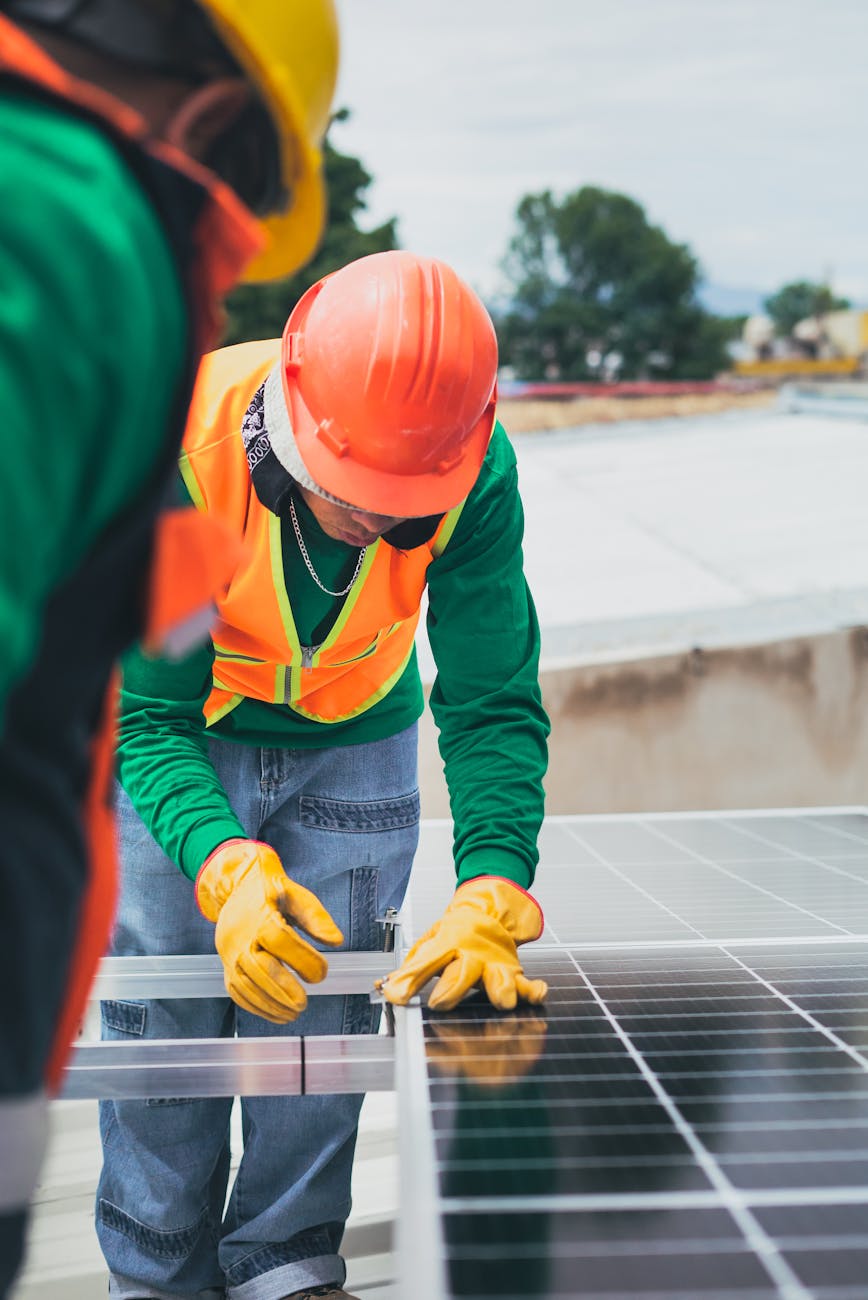
- Equipment delivery and installation (Day 1–2): Typically a one to two day job for a residential system. The crew mounts racking on your roof, installs panels, runs wiring to the inverter, and connects to your main electrical panel.
- City/county inspection (Week 6–8): A building inspector visits to verify the installation meets code. Most installations pass on the first inspection.
- Utility interconnection approval (Week 8–12): SCE reviews the interconnection application, installs a new bidirectional meter, and grants Permission to Operate (PTO).
- System activation and monitoring setup (Week 10–12): Your installer activates the system and sets up your monitoring app. You can now watch your panels produce electricity in real time.
Community Solar Options in Long Beach
Not every Long Beach homeowner can install rooftop solar — renters, condo residents, and those with heavily shaded or structurally unsuitable roofs may be excluded. Community solar offers an alternative: you subscribe to a share of a larger solar farm elsewhere in California and receive credits on your SCE bill proportional to your share's production.
Community solar programs in California vary in availability and credit structure. When evaluating a community solar subscription in Long Beach, ask whether the subscription is fixed-term or month-to-month, what happens if you move, and whether the per-kWh credit rate is locked or variable. Unlike rooftop solar, community solar typically requires no upfront payment and no installation — making it accessible to virtually any SCE customer.
Solar Panel Maintenance in Long Beach
One of solar's great advantages is how little maintenance it requires. Modern panels have no moving parts and are designed to withstand Mediterranean conditions including hail, wind, and UV exposure. Here's what Long Beach solar owners should know:
- Annual cleaning: In Long Beach's climate, panels may accumulate dust or pollen. An annual rinse with a garden hose (not a pressure washer) typically restores full output. Professional cleaning services charge $100–$200 for a residential system.
- Monitoring: Use your inverter's app (Enphase Enlighten, SolarEdge mySolarEdge, or equivalent) to check daily production. A sudden drop in output is the first sign of a potential issue.
- Inverter lifespan: String inverters typically last 10–15 years; microinverters and power optimizers are rated for 25 years. Budget for an inverter replacement around year 12–15 if applicable.
- Panel warranty: Most panels carry a 25-year product warranty and a performance warranty guaranteeing 80–87% of original output at year 25. Keep your installation documentation.
- Pest management: In some parts of Greater LA, squirrels and birds may nest under roof-mounted panels. Critter guards (wire mesh around the panel perimeter) are a simple preventive measure.
Comparing Solar Companies in Long Beach
The Long Beach solar market includes both national installers and local specialists. National companies like Sunrun, Sunnova, SunPower, and Tesla Energy offer the comfort of large brand names and standardized processes, but often charge a premium. Regional and local installers in California frequently match or beat national pricing while offering more personalized service and faster communication.
Regardless of which company you choose, request a detailed written proposal that includes: system size and number of panels, projected first-year production in kWh, estimated first-year savings in dollars, all applicable warranties (product, performance, installation), the full timeline from permit to PTO, and a line-item breakdown of all costs. Never sign a solar contract without understanding exactly what you're paying for and what the system is guaranteed to produce.
Is 2026 a Good Time to Go Solar in Long Beach?
Several factors make 2026 particularly favorable for solar investment in Long Beach:
- The 30% federal ITC is currently scheduled to step down after 2032, but legislative risk always exists. Locking in the full credit now eliminates that uncertainty.
- Solar panel prices have dropped over 90% since 2010 and appear to be near a price floor. Waiting rarely yields meaningful additional savings on equipment costs.
- Electricity rates in California continue to trend upward. Every month without solar is another month paying full retail rates.
- Battery storage technology has matured significantly. Homeowners who want backup power now have reliable, cost-competitive options like the Tesla Powerwall 3 and Enphase IQ Battery 5P.
- Solar permitting in Long Beach has become more streamlined in recent years, reducing the administrative burden on homeowners.
The main reason to wait would be if you're planning a roof replacement within the next 2–3 years — in which case coordinating the roof and solar installations together can save on labor costs. Otherwise, the financial case for going solar in Long Beach today is as strong as it's ever been.