

The Math: Panels Required for 1 Megawatt
One megawatt equals 1,000 kilowatts (kW). To calculate panels needed: divide 1,000,000 watts by individual panel wattage.
| Panel Wattage | Panels for 1 MW | Typical Use Case | Examples |
|---|---|---|---|
| 350W | 2,857 panels | Older commercial | Legacy installations |
| 400W | 2,500 panels | Standard commercial | Q CELLS, Canadian Solar |
| 440W | 2,273 panels | Premium commercial | LONGi Hi-MO, Jinko Tiger |
| 500W | 2,000 panels | Utility-scale | First Solar, SunPower |
| 600W+ (bifacial) | 1,667 panels | Large utility farms | JinkoSolar Tiger Pro |
1 MW Solar: Production, Revenue, and Financials
| Metric | Arizona (High Sun) | National Average | Massachusetts (Low Sun) |
|---|---|---|---|
| Annual production | 2,044 MWh | 1,898 MWh | 1,606 MWh |
| Homes powered | ~195 homes | ~181 homes | ~153 homes |
| Revenue at $0.07/kWh (wholesale) | $143,080 | $132,860 | $112,420 |
| Revenue at $0.13/kWh (commercial) | $265,720 | $246,740 | $208,780 |
| System cost (before ITC) | $800,000–$1,200,000 | ||
| After 30% ITC | $560,000–$840,000 | ||
| Payback period (commercial rate) | 3–4 years | 3–4 years | 4–5 years |
Scale Comparison: Residential vs Commercial vs Utility Solar
| Scale | System Size | Panels | Homes Powered | Cost After ITC |
|---|---|---|---|---|
| Residential | 8–12 kW | 20–30 | 1 home | $15,000–$25,000 |
| Small commercial | 50–200 kW | 125–500 | 5–20 homes | $70,000–$280,000 |
| Large commercial | 500 kW–1 MW | 1,250–2,500 | 50–100 homes | $350,000–$700,000 |
| Utility scale | 10–500 MW | 25,000–1.25M | 1,000–50,000 homes | $7M–$350M |
| Largest US solar farm | 2,245 MW (Blythe, CA) | ~5.6 million | ~450,000 homes | ~$3.5B |
Land Requirements for 1 MW of Solar
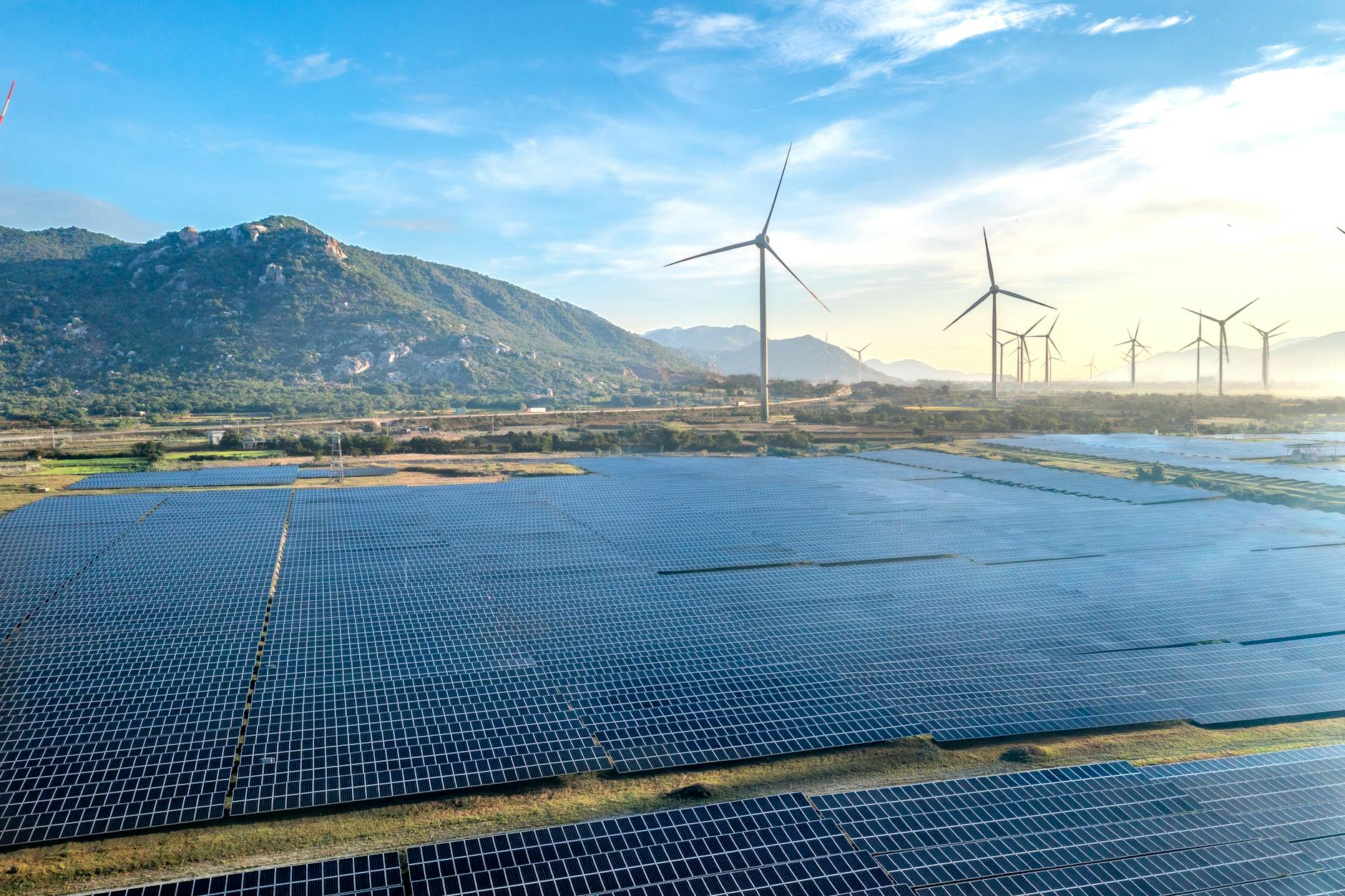
Ground-mounted utility-scale solar requires more space than just the panel footprint — access roads, inverter stations, security fencing, and maintenance paths all add to the required area. Industry standard is approximately 5–7 acres per MW for fixed-tilt installations, and 7–9 acres for single-axis tracking systems (which follow the sun and produce 15–25% more power but need more space between rows).
A 1 MW solar farm is roughly the size of 4–6 American football fields. For context, a 100 MW solar farm (enough for ~18,000 homes) covers approximately 500–700 acres — roughly one square mile.
The 30% ITC for Commercial Solar
The Inflation Reduction Act's 30% Investment Tax Credit applies to commercial and utility-scale solar through 2032, just as it does for residential. On a $1,000,000 commercial installation, that's $300,000 directly off corporate tax liability. Additional IRA provisions provide "adders" for projects in low-income communities (+10%), on brownfield sites (+10%), and using US-manufactured equipment (+10%) — potentially raising the effective credit to 50–60% for qualifying projects.